Attention Economy
How a Project Can Dominate the Attention Economy — Before the Strike
Every project is a mini-state.
And the larger a project becomes, the more it starts to resemble a state structure: with its own economy, population (audience), foreign policy, and internal crises.
In this text, we do not take a political position.
We look at what is happening through the lens of marketing.
Most importantly, you’ll be able to apply the tools discussed here to your own project — effectively.


Positioning Before the Strike
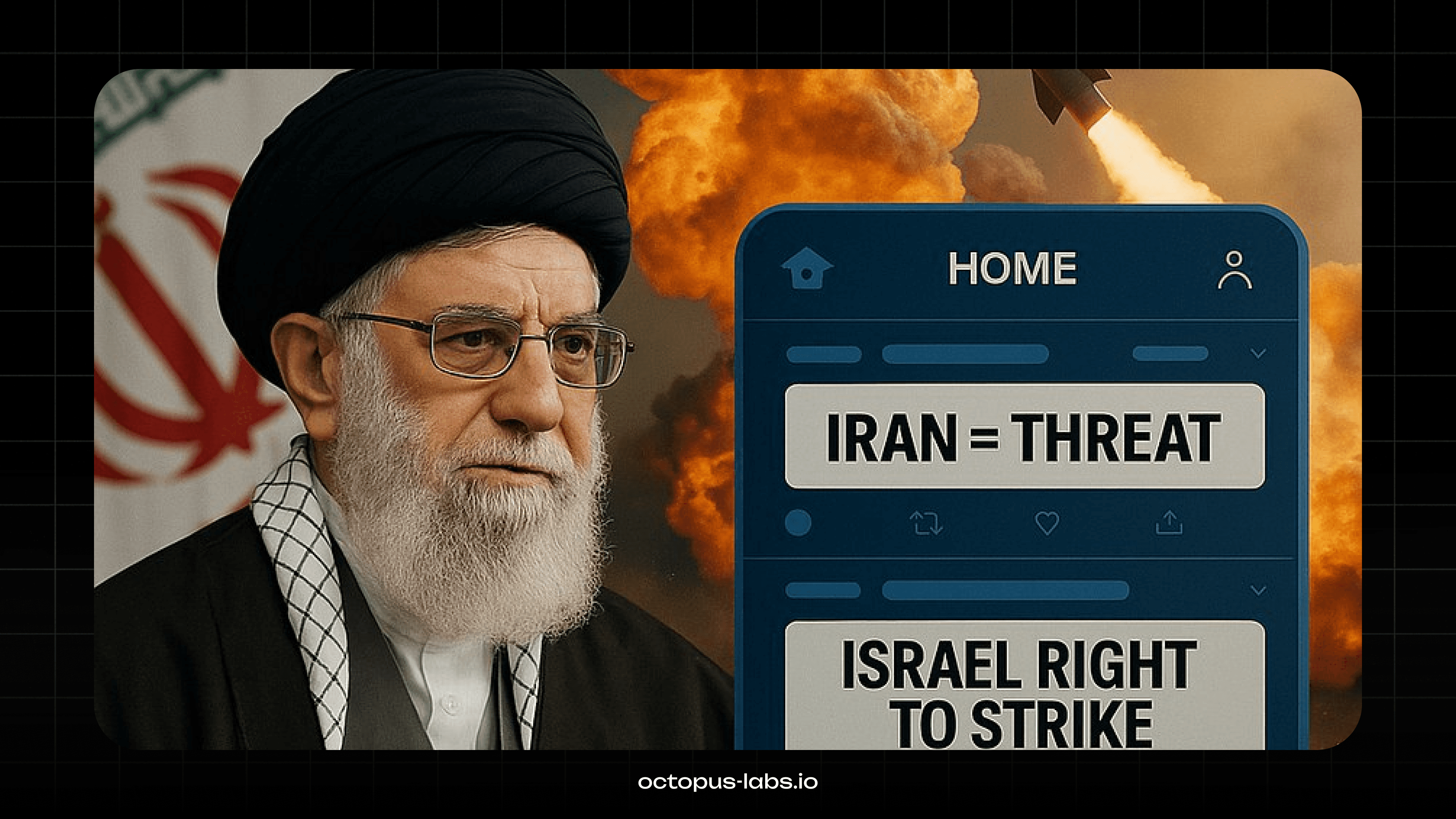
On June 13, Israel struck Iran. It was clear the campaign had been prepared in advance: the attack was carried out not only with long-range missiles, but also through sabotage inside the opposing country.
The Mossad is a key structure responsible for psychological impact, disinformation, and external information-psychological operations. And while some operatives physically disabled military infrastructure, others worked at the level of perception.
Israel prepared not only operational groups, but also media and socio-psychological operatives who launched a coordinated, large-scale attack on minds. Twitter, Telegram, Reddit — everything was activated. Narratives were launched before the first shots, so the strike happened first in perception.
Agree, dear builder: it’s much easier to attract holders into a memecoin when the information field around the project has already been shaped in a loyal and directional way — and at the moment of the event, everything simply consolidates around a key trigger.
Before June 13, X was already warmed up. Waves of fakes, memes, and semi-official “analysts” flooded feeds with narratives like “Iran = threat” and “Israel has the right to strike.” Accounts operating with bot-farm-level coordination acted in advance: flooding comments, packaging timelines, duplicating talking points.
At the same time, content was pushed in Persian via @IDFFarsi: “If you want to survive — contact Mossad.” AI-generated videos with fabricated destruction footage circulated and had already become part of the background by the time the strike occurred.
Across all key hashtags on X, the dominant position belonged to Israel. Mossad and the IDF also deliberately publish parts of operations in advance to prepare the field and trigger fear before an attack.
Israel didn’t just strike — it entered the mindspace first.
This is not noise. This is a pre-built resonance aligned to an upcoming event.
The Effect of a Convicted Minority
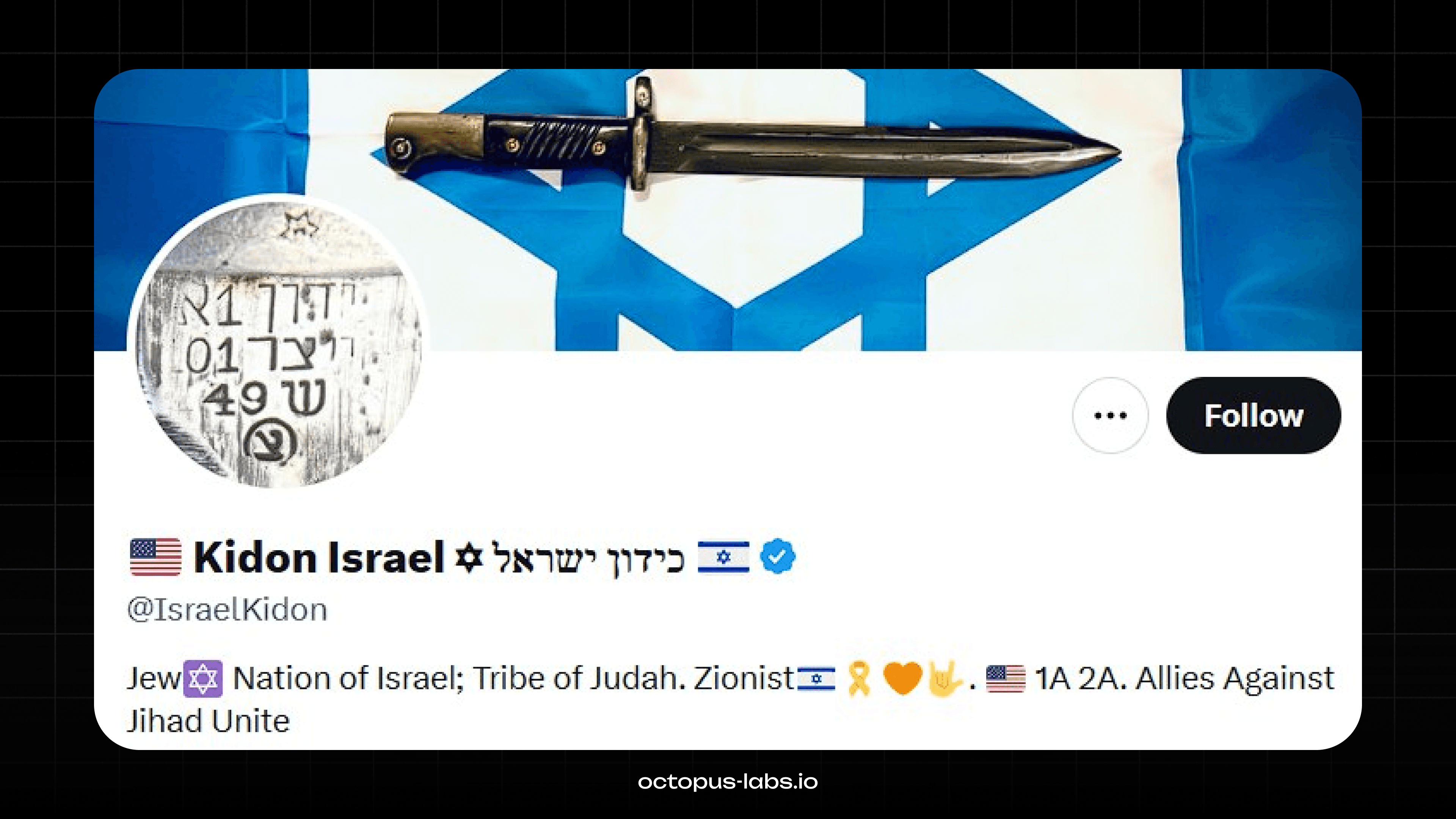
A small but consistent and persistent group can shift the opinion of the majority — even when it contradicts logic and initial beliefs.
There are dozens of studies and books on this. States use this extensively in information operations. Projects — far less systematically, often blindly. Israel, of course, is no exception.
To trigger a mass reaction, you don’t need a majority. You only need to reach a critical threshold — usually around 10% of engaged participants. Sometimes even a single active and visible actor can create the illusion of “mass opinion.”
Robert Cialdini showed that people follow those who display confidence — even if they stand alone. Passive majorities almost always lose to active minorities, especially when those minorities act aggressively, cohesively, and publicly.
Let me illustrate this at a micro level from our own environment:
We actively applied this method during a FUD attack in one of our cases. Project Y did action N, which triggered negativity in the community. But by that point, our pre-embedded accounts were already present in the project’s Telegram chat. They had long been active, keeping the chat alive and building trust. They made up roughly 10% of participants.
When FUD started, this minority quickly took a pro-project stance. To avoid looking like obvious “paid defenders,” we first staged visible debate between our own “doubters,” followed by a logical pivot toward loyalty.
This pseudo-spontaneous clash of opinions looked natural. Most chat participants didn’t engage in conflict — instead, they aligned with the final “reasonable” conclusion: staying with the project.
As a result, FUD passed far more smoothly than it could have. Most participants stayed, negativity remained low, and most importantly — belief, payments, and hope were preserved.
Israel did the same before the attack: it prepared an active minority across key information platforms. That minority activated at the right moment, set the vector, and helped consolidate “their side.”
Because in any war, you must first synchronize and consolidate your own field before pressuring the opponent’s.
Information Cascades
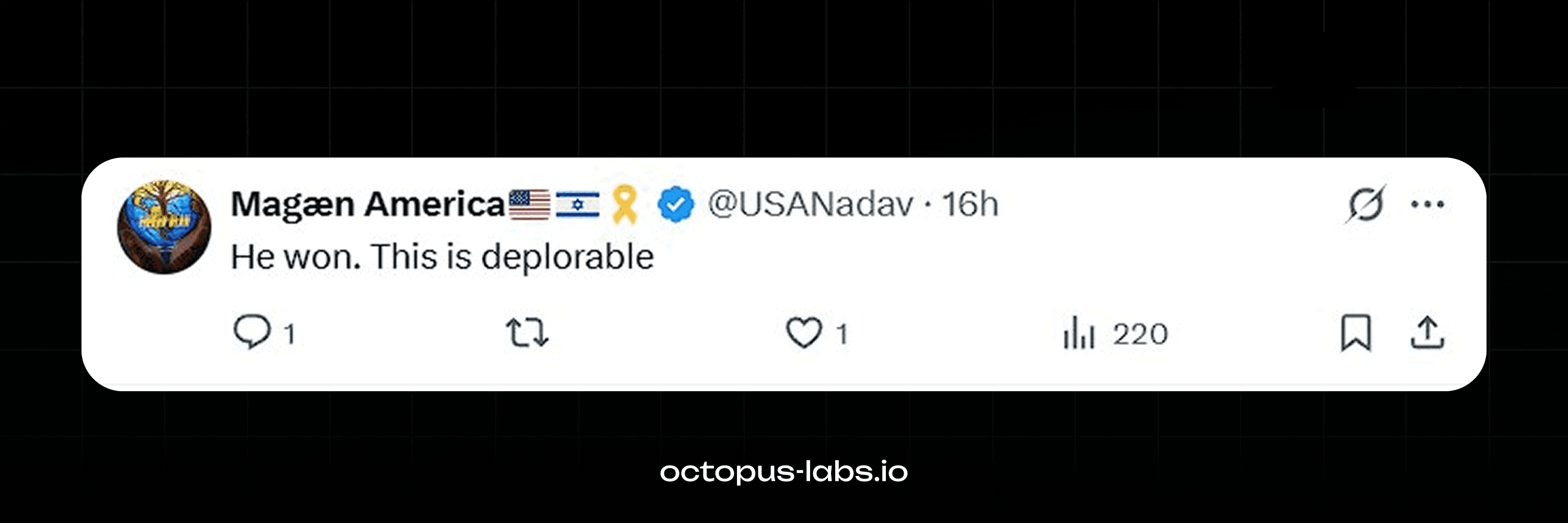
Numerous studies confirm that capturing the information space with a single narrative creates the effect of the only possible truth.
Information cascade theory (Bikhchandani et al.), perceptual dominance (NATO, RAND), the spiral of silence (Noelle-Neumann), and filter bubbles (Pariser) all show the same thing: a person enters an environment (via hashtags, comments, feeds), sees a unified narrative, and begins to adapt — even if they previously thought otherwise.
When space is oversaturated with one viewpoint, any alternative looks anomalous or marginal. And even if someone wants to find another perspective, under cognitive overload they often simply don’t search.
On X, under key hashtags and thematic posts, Mossad-aligned actors dominated. All states use this tool, especially during wartime. The difference lies in execution quality — how native it looks and how well each account is individualized. The balance between scale and quality is critical.
We actively execute similar operations on X and Telegram. Many projects have passed through this mechanism with us, and some public cases (though not in full detail) are available via our bot and channels.
In crypto terms: when a project has an event, we push all project publications to the top under relevant hashtags. That’s the minimum level. More advanced execution pushes not only official posts, but also opinions, emotions, and calls to action from third-party accounts — creating a sense of organic mass presence.
Active coverage also happens under key and trending posts. As a result, a typical Solana degen in their usual information field cannot miss what we want them to see.
There are many coverage variations — from minimal to highly native, diverse, and yet dominant.
This brings millions of impressions in a short time and captures attention from competitors. It’s significantly cheaper than pure KOL placements, amplifies influencer marketing, extends noise over time, lowers cost per contact, and increases impact density.
Information Leakage & Throughput Constraints
The more people know a secret, the less secret it becomes.
To execute coverage like Mossad’s manually requires hundreds of people — highly loaded, pre-informed, and tightly coordinated. Their actions must be constantly synchronized and controlled.
Here lies the main problem: the more people involved, the higher the risk of leaks, failures, and internal breakdowns.
Simply hiring people isn’t enough. They must be trained. Software must be designed correctly — with deep understanding of processes, goals, mechanics, and psychology. And that software must be supervised by someone who truly understands where and why the strike is delivered.
We don’t know how Mossad solves this. But internally, we’ve already addressed these challenges.
We combine human operators with software that scales campaigns to the level of information operations. Employees receive only partial information. Access is tiered. Sensitive cases are never published. Every action — thousands, hundreds of thousands — is monitored live by the most experienced operator.
If a failure occurs — technical or human — we detect and fix it in real time.
This is the foundation: scale with control, effect with security.
Conclusion. We Need You
In the information domain, Israel won the first days — largely due to the methods described above. Naturally, this wasn’t the entirety of the operation, but these principles and tools were core.
This wasn’t improvisation. It was deliberate, large-scale work grounded in decades of research and years of practice.



How a Project Can Dominate the Attention Economy — Before the Strike
Every project is a mini-state.
And the larger a project becomes, the more it starts to resemble a state structure: with its own economy, population (audience), foreign policy, and internal crises.
In this text, we do not take a political position.
We look at what is happening through the lens of marketing.
Most importantly, you’ll be able to apply the tools discussed here to your own project — effectively.

Positioning Before the Strike
On June 13, Israel struck Iran. It was clear the campaign had been prepared in advance: the attack was carried out not only with long-range missiles, but also through sabotage inside the opposing country.
The Mossad is a key structure responsible for psychological impact, disinformation, and external information-psychological operations. And while some operatives physically disabled military infrastructure, others worked at the level of perception.
Israel prepared not only operational groups, but also media and socio-psychological operatives who launched a coordinated, large-scale attack on minds. Twitter, Telegram, Reddit — everything was activated. Narratives were launched before the first shots, so the strike happened first in perception.
Agree, dear builder: it’s much easier to attract holders into a memecoin when the information field around the project has already been shaped in a loyal and directional way — and at the moment of the event, everything simply consolidates around a key trigger.
Before June 13, X was already warmed up. Waves of fakes, memes, and semi-official “analysts” flooded feeds with narratives like “Iran = threat” and “Israel has the right to strike.” Accounts operating with bot-farm-level coordination acted in advance: flooding comments, packaging timelines, duplicating talking points.
At the same time, content was pushed in Persian via @IDFFarsi: “If you want to survive — contact Mossad.” AI-generated videos with fabricated destruction footage circulated and had already become part of the background by the time the strike occurred.
Across all key hashtags on X, the dominant position belonged to Israel. Mossad and the IDF also deliberately publish parts of operations in advance to prepare the field and trigger fear before an attack.
Israel didn’t just strike — it entered the mindspace first.
This is not noise. This is a pre-built resonance aligned to an upcoming event.
The Effect of a Convicted Minority
A small but consistent and persistent group can shift the opinion of the majority — even when it contradicts logic and initial beliefs.
There are dozens of studies and books on this. States use this extensively in information operations. Projects — far less systematically, often blindly. Israel, of course, is no exception.
To trigger a mass reaction, you don’t need a majority. You only need to reach a critical threshold — usually around 10% of engaged participants. Sometimes even a single active and visible actor can create the illusion of “mass opinion.”
Robert Cialdini showed that people follow those who display confidence — even if they stand alone. Passive majorities almost always lose to active minorities, especially when those minorities act aggressively, cohesively, and publicly.
Let me illustrate this at a micro level from our own environment:
We actively applied this method during a FUD attack in one of our cases. Project Y did action N, which triggered negativity in the community. But by that point, our pre-embedded accounts were already present in the project’s Telegram chat. They had long been active, keeping the chat alive and building trust. They made up roughly 10% of participants.
When FUD started, this minority quickly took a pro-project stance. To avoid looking like obvious “paid defenders,” we first staged visible debate between our own “doubters,” followed by a logical pivot toward loyalty.
This pseudo-spontaneous clash of opinions looked natural. Most chat participants didn’t engage in conflict — instead, they aligned with the final “reasonable” conclusion: staying with the project.
As a result, FUD passed far more smoothly than it could have. Most participants stayed, negativity remained low, and most importantly — belief, payments, and hope were preserved.
Israel did the same before the attack: it prepared an active minority across key information platforms. That minority activated at the right moment, set the vector, and helped consolidate “their side.”
Because in any war, you must first synchronize and consolidate your own field before pressuring the opponent’s.
Information Cascades
Numerous studies confirm that capturing the information space with a single narrative creates the effect of the only possible truth.
Information cascade theory (Bikhchandani et al.), perceptual dominance (NATO, RAND), the spiral of silence (Noelle-Neumann), and filter bubbles (Pariser) all show the same thing: a person enters an environment (via hashtags, comments, feeds), sees a unified narrative, and begins to adapt — even if they previously thought otherwise.
When space is oversaturated with one viewpoint, any alternative looks anomalous or marginal. And even if someone wants to find another perspective, under cognitive overload they often simply don’t search.
On X, under key hashtags and thematic posts, Mossad-aligned actors dominated. All states use this tool, especially during wartime. The difference lies in execution quality — how native it looks and how well each account is individualized. The balance between scale and quality is critical.
We actively execute similar operations on X and Telegram. Many projects have passed through this mechanism with us, and some public cases (though not in full detail) are available via our bot and channels.
In crypto terms: when a project has an event, we push all project publications to the top under relevant hashtags. That’s the minimum level. More advanced execution pushes not only official posts, but also opinions, emotions, and calls to action from third-party accounts — creating a sense of organic mass presence.
Active coverage also happens under key and trending posts. As a result, a typical Solana degen in their usual information field cannot miss what we want them to see.
There are many coverage variations — from minimal to highly native, diverse, and yet dominant.
This brings millions of impressions in a short time and captures attention from competitors. It’s significantly cheaper than pure KOL placements, amplifies influencer marketing, extends noise over time, lowers cost per contact, and increases impact density.
Information Leakage & Throughput Constraints
The more people know a secret, the less secret it becomes.
To execute coverage like Mossad’s manually requires hundreds of people — highly loaded, pre-informed, and tightly coordinated. Their actions must be constantly synchronized and controlled.
Here lies the main problem: the more people involved, the higher the risk of leaks, failures, and internal breakdowns.
Simply hiring people isn’t enough. They must be trained. Software must be designed correctly — with deep understanding of processes, goals, mechanics, and psychology. And that software must be supervised by someone who truly understands where and why the strike is delivered.
We don’t know how Mossad solves this. But internally, we’ve already addressed these challenges.
We combine human operators with software that scales campaigns to the level of information operations. Employees receive only partial information. Access is tiered. Sensitive cases are never published. Every action — thousands, hundreds of thousands — is monitored live by the most experienced operator.
If a failure occurs — technical or human — we detect and fix it in real time.
This is the foundation: scale with control, effect with security.
Conclusion. We Need You
In the information domain, Israel won the first days — largely due to the methods described above. Naturally, this wasn’t the entirety of the operation, but these principles and tools were core.
This wasn’t improvisation. It was deliberate, large-scale work grounded in decades of research and years of practice.


Read more


Legal

Sky Consulting
Group LLC-FZ
Legal
Sky Consulting
Group LLC-FZ

Legal
Sky Consulting
Group LLC-FZ