Digital Dollar Yield: Beyond the Rate
Research by Octopus Labs & Caminotreasury.com
Core Point
Two shifts in the corpus are already useful as product guidance.
First, the rate stops carrying the argument by the time the user or partner reaches the exit. During the retention stage, the share of lines where yield appears without an explicit control layer is 60.8% out of 1,164 lines. During partner due diligence, it is 10.1% out of 1,102 lines. During withdrawal, it is 1.5% out of 1,007 lines. The closer the product gets to review, withdrawal, or risk, the less the rate works on its own.
Second, evidence quality changes how yield should be packaged. When there is no evidence, yield without control appears in roughly 40% of yield-related lines. When the evidence is verifiable, the number is around 10%. A verifiable structure almost never leaves the rate hanging in the air.
The conclusion is simple: yield has to be designed as a trust system. Source of yield, custody, legal structure, withdrawal, evidence, and failure scenarios should be part of the product itself, not an appendix to the landing page.
This document should not be read as an academic market study. It is a strategic memo built from a public corpus, product logic, partner questions, and behavioral mechanisms. The goal is practical: help a team see faster where a yield product looks credible and where it looks like hidden risk.


Seven Questions Before Launch
Before showing a rate to a user or partner, the team should pass a basic filter.
Where does the yield come from: Treasuries, lending, DeFi, fees, a marketing subsidy, or a mixed model?
Where are assets held, who is actually responsible for custody?
What is product legally: a payment stablecoin, e-money, an investment product, a reward, an account, a wallet, or a partner wrapper?
How does the user exit: timing, limits, fees, queue, pause conditions, and the process if something breaks?
What can be verified: report, custodian, proof of reserves, legal opinion, partner terms, license status?
What changes under stress: mass withdrawals, falling yield, manager failure, counterparty freeze, regulatory request?
How would support, partnerships, compliance, and the partner explain this if the founder is not in the chat?
If the team does not have short answers to these questions, a higher rate increases suspicion.
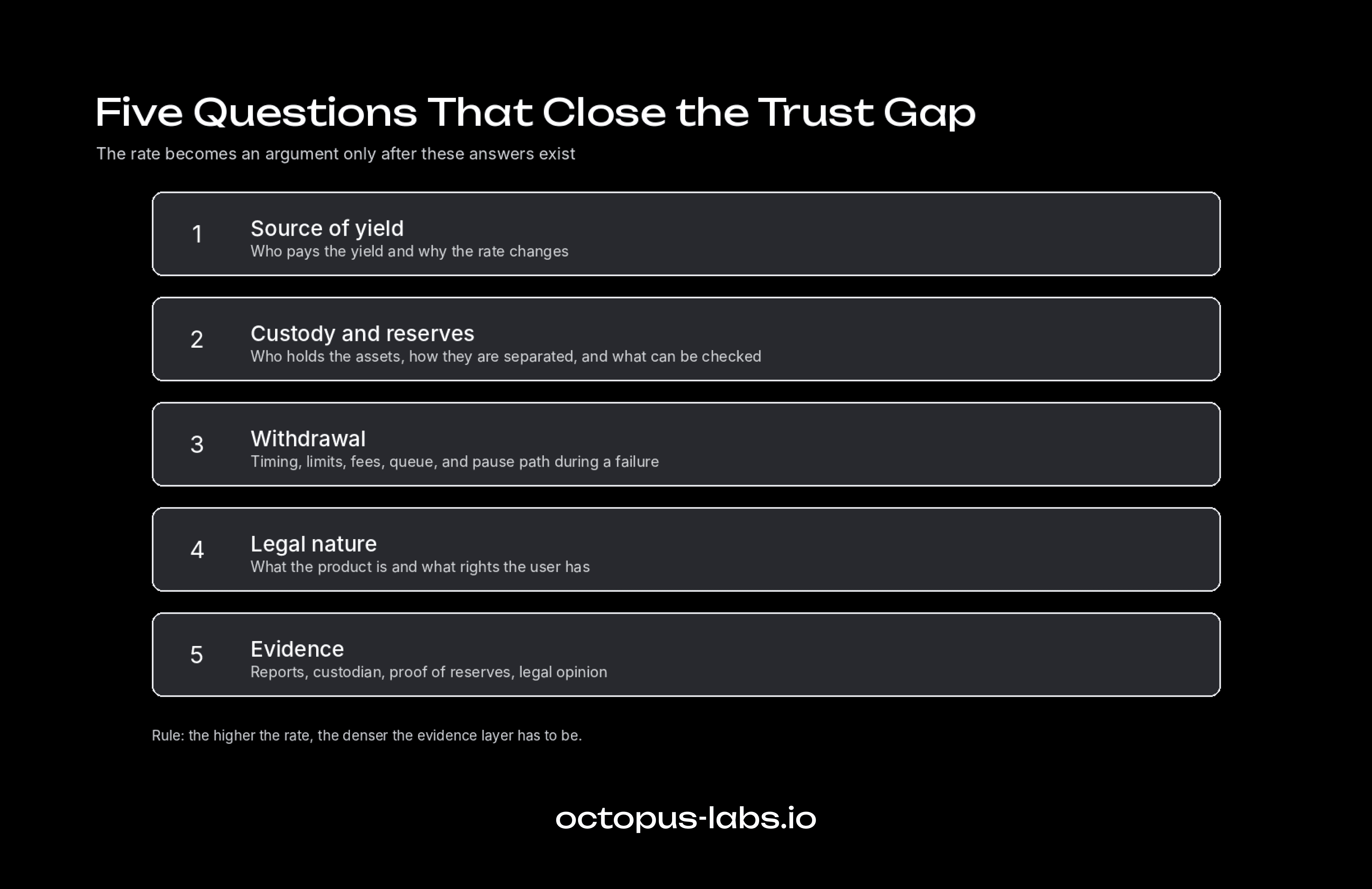
Fig. 1. Five questions that close the trust gap.
Partner Package: Part of the Product, Not an Attachment
For a neobank, crypto card, payment provider, or wallet, the partner package matters as much as the landing page. It should survive internal review without the founder constantly explaining the product.
The minimum package has to serve six internal readers: product, partnerships, compliance, treasury, support, and partner leadership. Each reader needs a working answer, not a pitch line: what can be promised to the user, who holds the assets, how withdrawals work, where the legal boundary sits, which risks remain, and what to do when something fails.
A strong partner package does not speed up a deal because it looks polished. It speeds up a deal because it reduces the number of internal questions on the partner side.
What the Corpus Actually Shows
The final corpus contains 5,817 lines after deduplication. Of these, 4,758 lines were marked as useful signals. Within the corpus, 3,523 signals came from X/Twitter and 1,235 came from the open web layer. For deeper coding, we separately selected 4,000 concrete, non-duplicate lines.
An important limitation: this is not a measurement of the entire market and not a behavioral experiment. It is a public corpus. It shows which questions, fears, explanations, and promises appear more often in the open digital environment around stablecoin yield, crypto cards, neobanks, and yield-bearing dollar products.
The dated X layer covers the period from 29 June 2022 to 25 May 2026. Data collection took place on 24-25 May 2026. The web layer does not have a reliable publication date for every line, so the web is used as a source and genre layer, not as a precise timeline.
In this corpus, around 70% of useful signals relate to control: withdrawal, law, custody, source of yield, fees, risks, and evidence. Among lines that mention yield, around 80% appear next to risk or control language. This does not mean that “80% of the market thinks this way.” The correct reading is narrower: in the public corpus we collected, yield is more often discussed together with the question “why can this be trusted?” than in isolation.
Source genres also need to be read carefully. At the top level, there is X/Twitter and the web layer. Inside the deep coding, the web layer is broken down into product pages, Reddit and forums, regulatory sources, industry media, and support complaints. X/Twitter, Reddit, and forums show the social layer: arguments, questions, doubts, reactions.
Public product pages, FAQ sections, and terms show a product promise rather than a social signal. Regulatory documents and bank materials show the institutional layer. Industry media is kept as a separate genre in this version for transparency, but the sample there is small. The same is true for support complaints: useful examples, but not a statistically strong base.
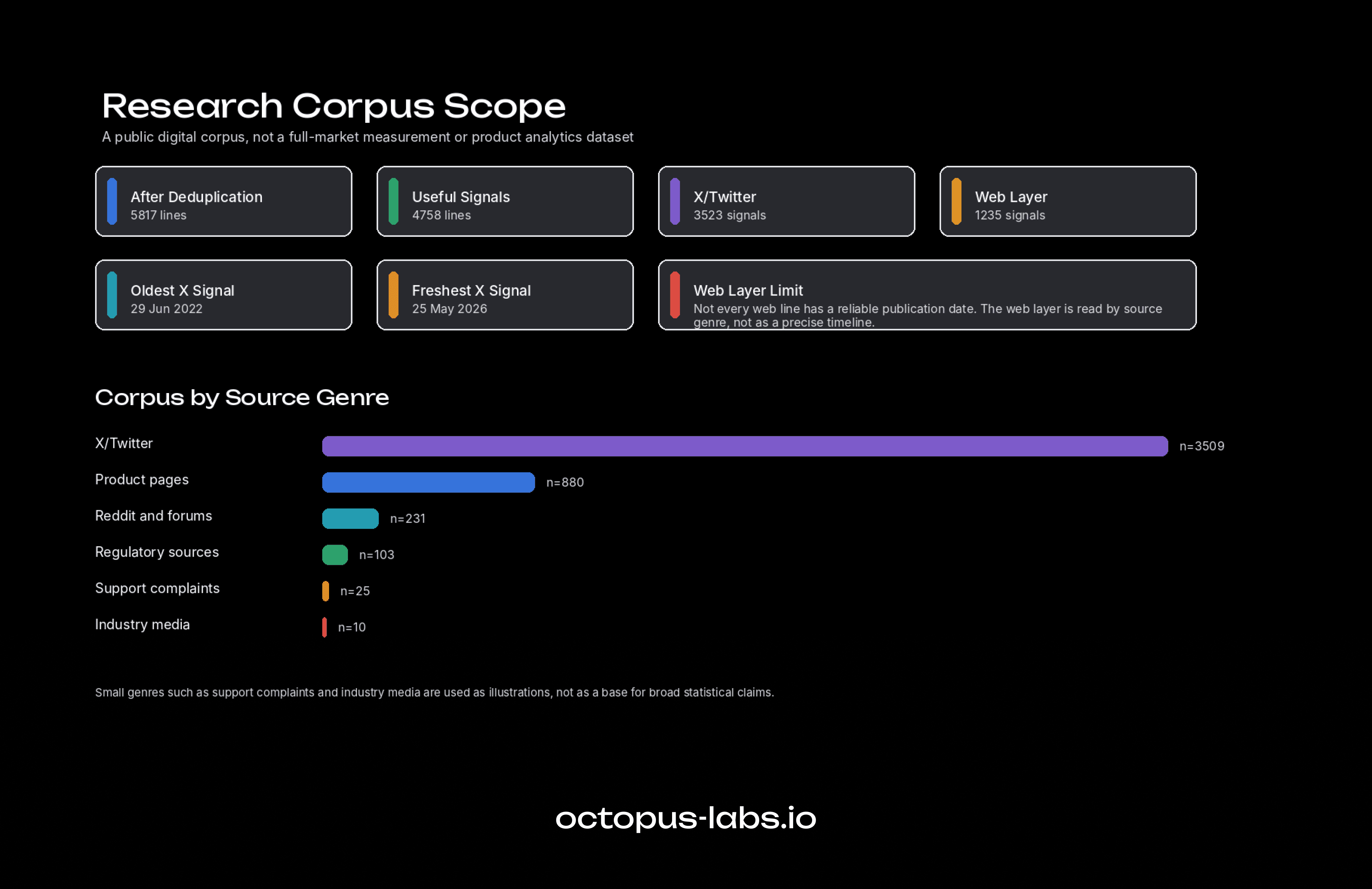
Fig. 2. Corpus perimeter, dates, and source limitations.
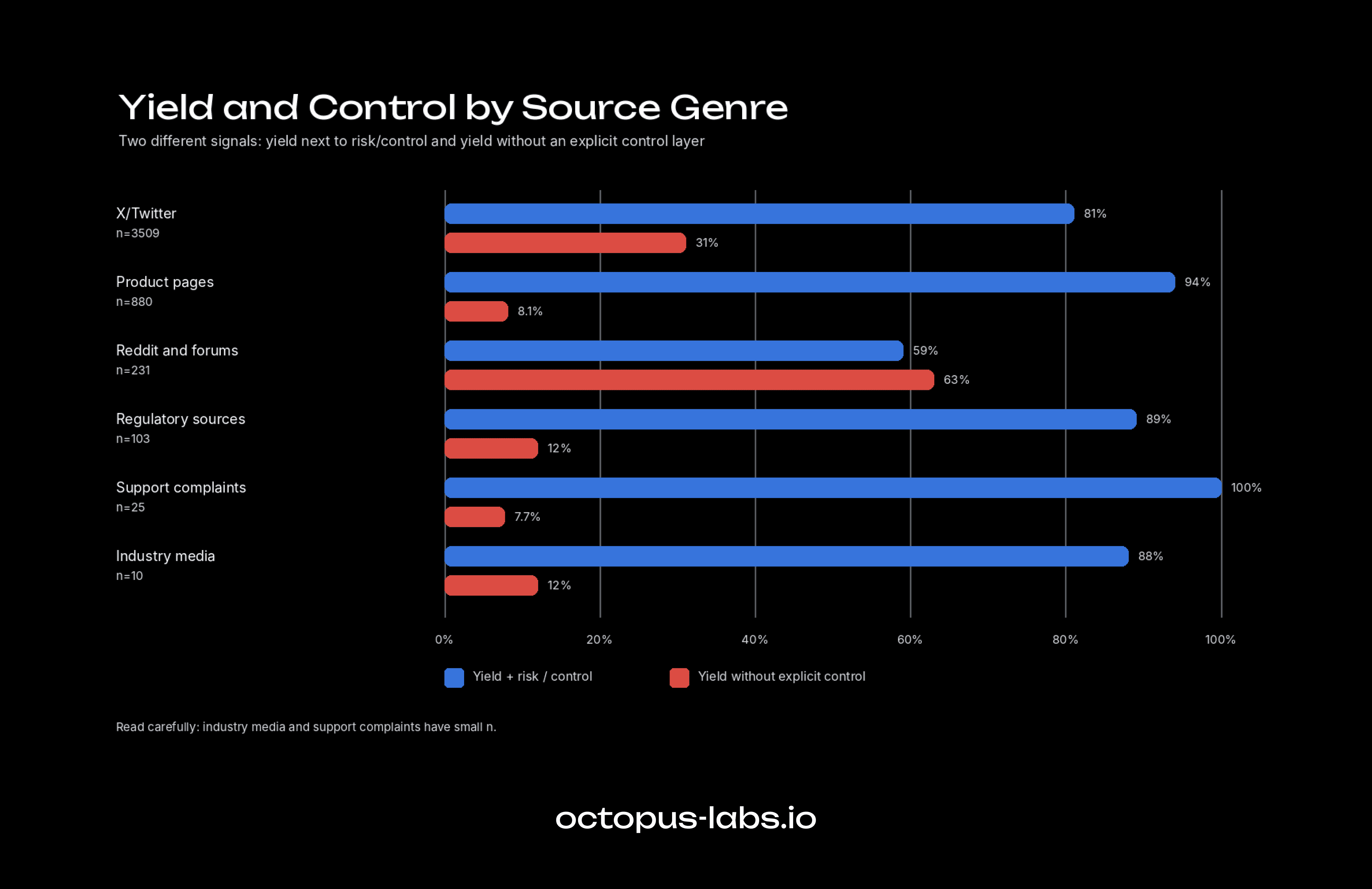
Fig. 3. Where yield appears with risk and control language.
Evidence Matters More Than Promises
The most useful cut in the data is not “how many times yield was mentioned.” It is the quality of evidence. The corpus contains 2,947 lines with no explicit evidence, 1,201 lines with claimed evidence, and 610 lines with verifiable evidence.
The difference is straightforward:
Claimed evidence: “safe,” “backed,” “regulated,” “partners are vetted.”
Verifiable evidence: report, custodian, proof of reserves, legal opinion, clear responsibility map, public withdrawal terms.
This is where the behavioral logic of a costly signal matters. A claim costs almost nothing. It is easy to write on a website. Verifiable evidence costs effort: the team has to disclose structure, show the counterparty, provide the document, and survive partner questions. That is why it reads as stronger.
A simple example: “safe and regulated” is a claim. “Here is the custodian, here is the report, here is the legal structure, here are the withdrawal terms” is a verifiable structure. Inside yield-related lines without a control layer, the share of “naked rate” language is sharply higher where evidence is absent. With no evidence, it is around 40%. With claimed evidence, around 11%. With verifiable evidence, around 10%.
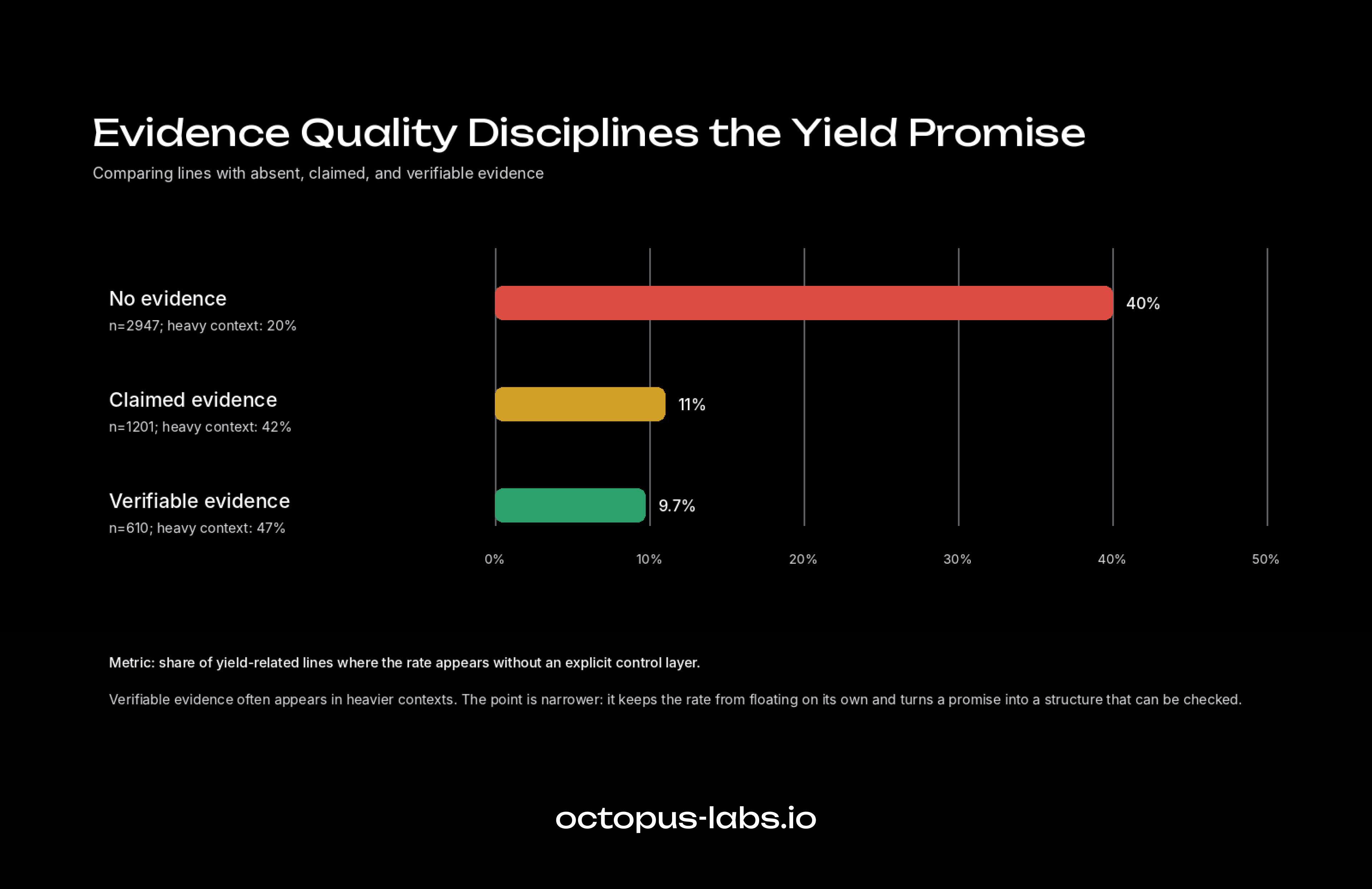
Fig. 4. Evidence quality and yield without control.
One Rate, Different Readers
The same yield is read differently depending on who is looking at it.
A retail user is more likely to see the first screen, the rate, the ease of entry, and the ability to exit quickly. A partner reads differently: legal nature, custody, liquidity, accountability, restrictions, answers for its own support team, and internal reputational risk.
The deep coding shows this across the user and partner journey. During retention, the share of “rate without control” is 60.8% out of 1,164 lines. During partner due diligence, it is 10.1% out of 1,102 lines. During withdrawal, it is 1.5% out of 1,007 lines. In other words, the rate can attract attention during retention, but it almost stops working as a standalone argument once review, withdrawal, or risk begins.
The practical conclusion: do not use one text for everyone. The user needs a simple causal model. The partner needs an evidence package. Compliance needs a legal map. Treasury needs a liquidity scenario. Support needs answers for failures.
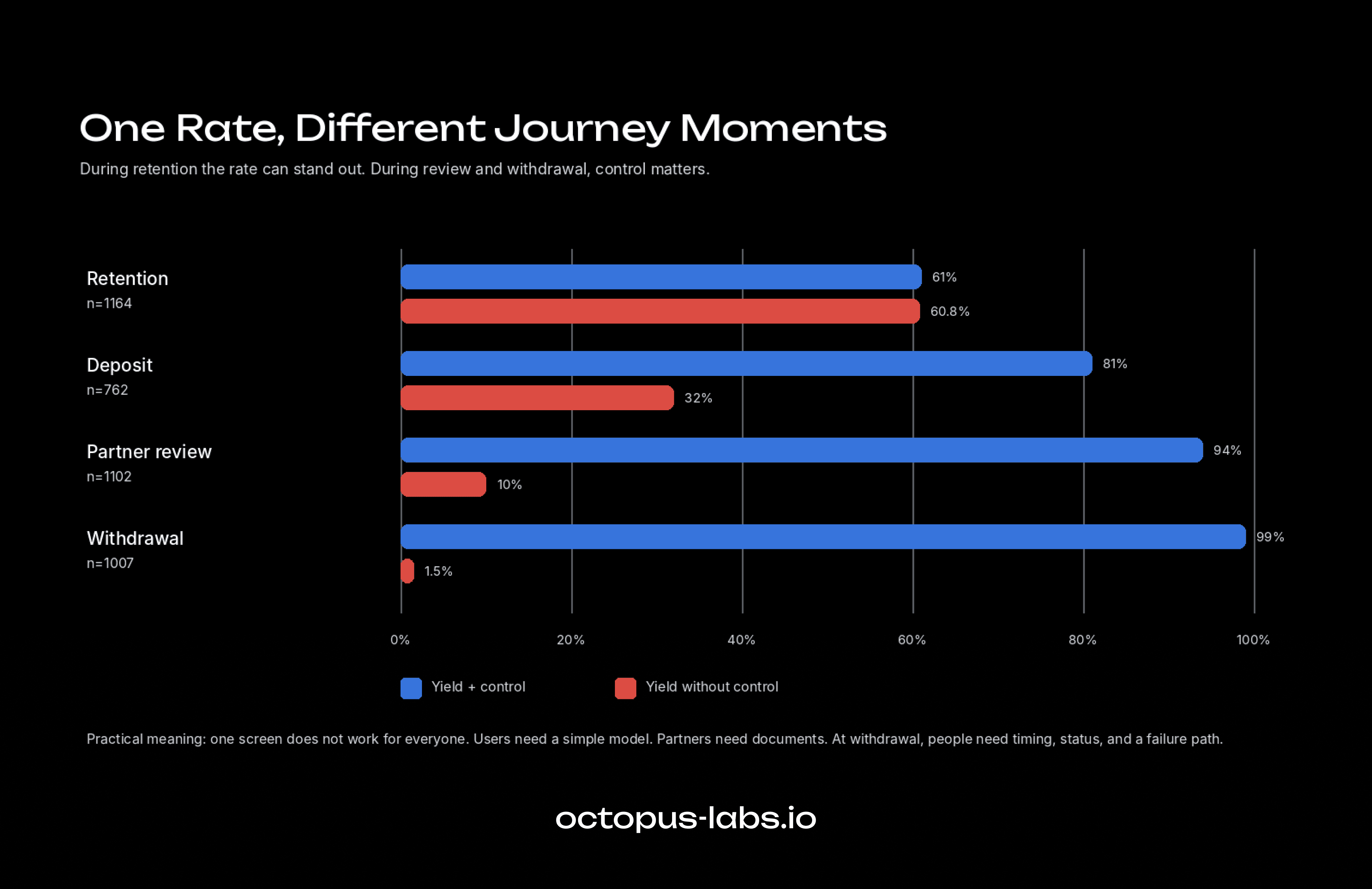



Fig. 5. How the role of the rate changes across the user and partner journey.
Withdrawals: Trust Is Tested at the Exit
Trust in a financial product is not tested at deposit. It is tested when a person tries to get their money out.
In the cut of 403 lines around pauses, freezes, stuck withdrawals, and delays, roughly two thirds of signals contain at least some explanation of the reason. That does not mean the explanation is good. The coding only captures whether a reason, status, liquidity issue, risk, incident, or external factor is visible. In roughly one third of the cut, the reason is hard to read from the signal. In more than one third, the surrounding language includes panic, loss of trust, crisis, or fear.
This does not mean that every withdrawal pause is a disaster. The reason can be technical, regulatory, liquidity-driven, related to an external manager, or connected to post-incident protection. But if the product is new, and the stop is fast and poorly explained, the market almost immediately fills the gap with the worst scenario.
That is why withdrawal rules should not be hidden at the bottom of a page. Timing, limits, fees, queue, pause conditions, and communication process during a failure should be visible before deposit. For a partner, this is a separate part of pre-deal review.
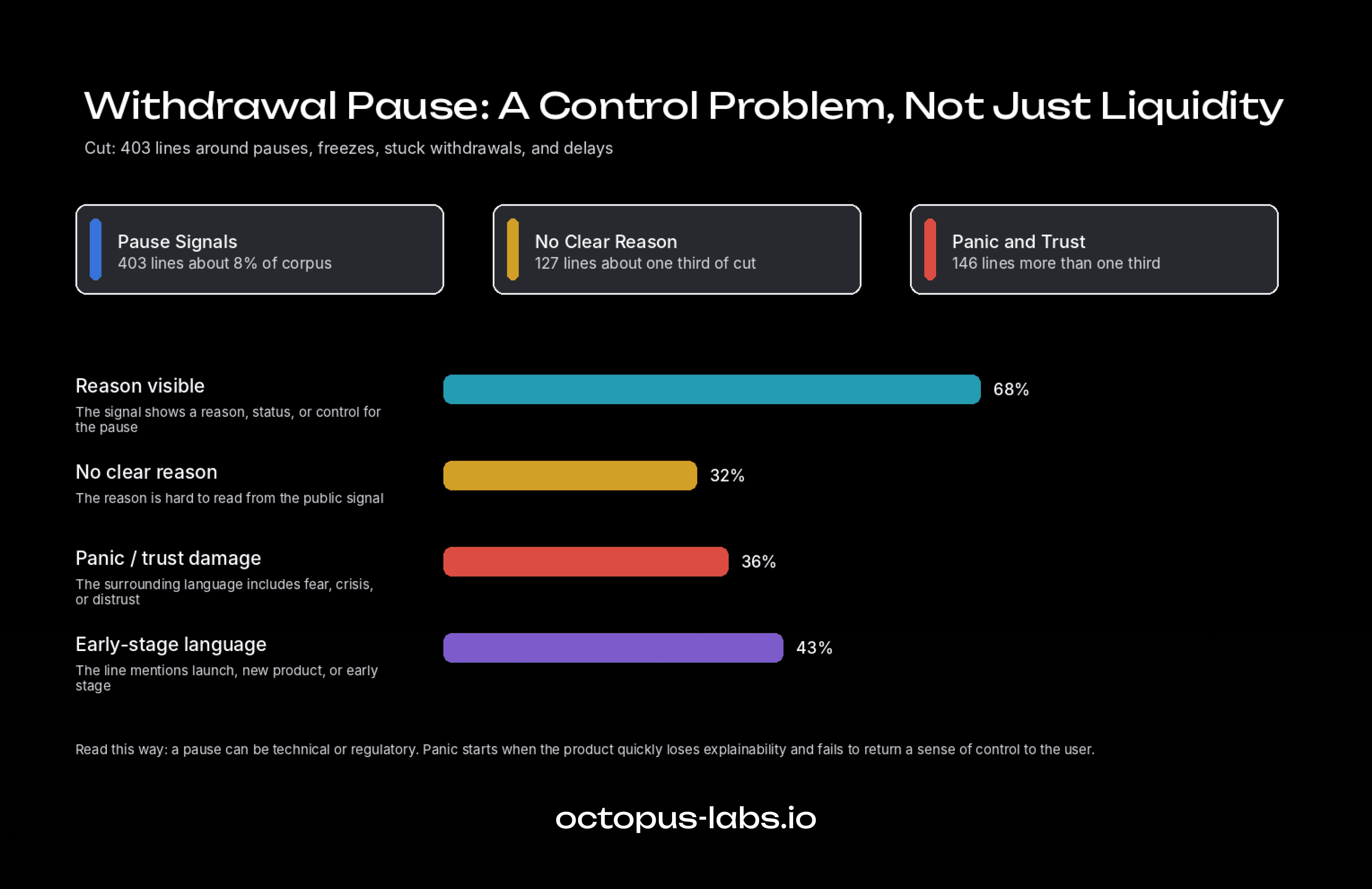
Fig. 6. What happens when withdrawal stops.
Regulatory Window 2025-2027
Legal clarity is quickly moving from an advantage to basic hygiene.
The GENIUS Act became US law on 18 July 2025. The law creates a framework for payment stablecoins. For a team selling yield through a neobank, card, or wallet, four practical points matter:
issuance of a payment stablecoin to US users is tied to permitted issuer status;
reserves must support the stablecoin at least one-to-one and consist of permitted liquid assets;
the issuer must publicly disclose its redemption policy and publish reserve details monthly;
issuers fall under Bank Secrecy Act requirements for AML purposes.
In Europe, MiCA applies to asset-referenced tokens and e-money tokens from 30 June 2024, and the broader MiCA regime applies from 30 December 2024. For a partner model, the key issue is not only the dates but also classification: whether the asset is an ART, EMT, or another crypto-asset; who the issuer is; where issuance and redemption are described; how the reserve of assets is disclosed; whether part of the reserve can be invested; and how that affects risk.
For the product, this does not mean “add a legal paragraph.” It means understanding in advance which promises can be made to the user, where the product looks like a payment instrument, where it looks like an investment product, who is the issuer or partner, what rights the user has, and how withdrawal is explained.
This matters especially for teams selling through partners. A partner is not only looking at deal economics. It is asking whether it can explain the product internally and in front of a regulator.
Scientific Layer: Mechanism, Not Market Proof
The scientific layer does not prove that the market “definitely” behaves in one specific way. It explains why the pains found in the corpus work at a human level.
The most useful mechanisms:
Loss aversion: losing access to money is psychologically heavier than missing out on a few percentage points of yield.
Sense of control: clear withdrawal terms, operation status, and failure process restore a person’s feeling of control.
Ambiguous risk: if the source of yield is unclear, people fill in the hidden threat themselves.
Verifiable signal: report, custodian, reserve, and legal structure are stronger than the words “safe” and “regulated.”
Causal model: the person has to understand who pays the yield, why the rate changes, and where the model can break.
The evolutionary logic should stay short. People remember negative experiences with money more strongly because loss of access to a resource is perceived as a threat. That is why major category failures continue to affect new products, even when the new product is built better.
Terra, Celsius, Stream/xUSD: Category Memory
These cases should not be presented as a large statistical event study. In our corpus, the event windows for individual cases are sometimes small, so the more accurate use is category memory.
Terra/Anchor showed that a high rate can look convincing for a long time while the market believes in the structure. Once that belief breaks, the percentage stops being an argument.
Celsius showed something else: users evaluate the product not by the promised yield, but by their ability to exit. Once withdrawals stop, the service is no longer a yield product. It becomes an access-to-money problem.
Stream/xUSD shows a recent version of the same logic. In our event cut after the Stream/xUSD incident, there were 74 lines; 47.3% of them contained threat language together with control language, while the share of “rate without control” was 12.2%.
The sample is small, so this is not a full causal model. But as an illustration of the shift, it is useful: after a large loss at an external manager and a halt in operations, attention moves away from the rate and toward source of risk, liquidity, and the right to exit.
The conclusion is not that all yield products are equally dangerous. The conclusion is different: new products are read through old failures. If the team does not show control in advance, the audience brings its worst memories on its own.
What Can Be Applied From This Research
The research does not say that everyone should build the same product. It shows where a yield structure most often loses trust and which elements should be checked before scaling.
1. Split the Message by Journey Moment
Do not write one universal text about yield. During retention, the rate can still be the main hook. During partner due diligence and withdrawal, it almost stops working without a control layer.
In practice: the first screen can sell the benefit, the deposit screen should explain the structure, the withdrawal screen should return control, and the partner package should pass internal review without a founder call.
2. Audit the Promises
All phrases like “safe,” “regulated,” “backed,” and “vetted by partners” should be split into two groups: what can be verified and what is still only a claim.
The task is to replace cheap claims with verifiable elements: custodian report, proof of reserves, legal structure, withdrawal description, market restrictions, and the partner’s clear role.
3. Make Withdrawal Visible Before Deposit
Withdrawal should not be explained only when the user is already trying to get their money out. At that moment, trust is being tested in practice, and every unclear point is read more harshly.
Timing, limits, fees, queue, possible pause reasons, and communication process should be visible before deposit. For a new product, it is especially important to explain in advance what happens during a technical, regulatory, or liquidity delay.
4. Keep the Control Layer Updated
The main mistake is to build a strong package once and then forget about it. In a yield product, rates, partners, custodians, jurisdictions, limits, and withdrawal terms change. If user-facing text, partner materials, and support answers do not update with the product, the control layer quickly becomes stale.
The team needs an owner for this layer. Any change in rate, partner, custodian, jurisdiction, or withdrawal rules should update the landing page, FAQ, partner package, and support answers.
What This Corpus Does Not Show
To keep the document honest, the limitations should sit next to the conclusions.
The corpus does not show the share of the entire market. It shows the structure of open digital signals.
The corpus does not prove in-product user behavior. For that, the team needs product data: deposits, withdrawals, retention, support tickets, conversion, and churn.
The corpus contains many public questions and regulatory language. The conclusions should therefore be read as a map of anxieties and checks, not as a map of mass demand.
The dated timeline is more reliable for X/Twitter. The web layer is used by genre and source because not every line has a publication date.
Small genres such as support complaints and industry media are useful as illustrations, but should not carry large statistical conclusions.
Event windows around Terra, Celsius, MiCA, GENIUS, and Stream/xUSD help reveal category memory, but they are not a full causal model.
The scientific layer explains mechanisms of risk perception, control, and evidence. It is not a direct neuro-measurement of reactions to stablecoin yield.
These limitations do not weaken the document. They make it sturdier. A strong reader will ask these questions anyway. It is better to answer them directly.
Final Takeaway
Digital dollar yield remains a strong product argument, but only when the rate is built into a clear financial structure.
The rate gets attention. Trust is created by other things: source of yield, verifiable custody, legal clarity, withdrawal terms, failure scenario, and an evidence package that a partner can defend inside its own organization.
Appendix A. Research Base Charts
This version keeps only the charts that help decision-making.
Corpus perimeter. 5,817 lines after deduplication, 4,758 useful signals; dated X layer: 29 June 2022 to 25 May 2026.
Yield and control by genre. Deep genre coding: X/Twitter, product pages, Reddit/forums, regulatory sources, small illustrative genres.
Evidence quality. 2,947 lines with no explicit evidence, 1,201 with claimed evidence, 610 with verifiable evidence.
Different journey moments. Retention n=1,164, deposit n=762, partner review n=1,102, withdrawal n=1,007.
Withdrawal pause. n=403 lines around pause, freeze, stuck withdrawal, and delay.
Trust stack. Five questions that should be closed before scaling.
Appendix B. Reference Sources for Fact Checks
GENIUS Act, Congress.gov:
https://www.congress.gov/bill/119th-congress/senate-bill/1582GENIUS Act signed into law, White House, 18.07.2025:
https://www.whitehouse.gov/briefings-statements/2025/07/the-president-signed-into-law-s-1582/MiCA, Regulation (EU) 2023/1114, EUR-Lex:
https://eur-lex.europa.eu/legal-content/EN/TXT/?uri=CELEX%3A32023R1114ESMA MiCA overview:
https://www.esma.europa.eu/esmas-activities/digital-finance-and-innovation/markets-crypto-assets-regulation-micaEBA MiCA page for ARTs and EMTs:
https://www.eba.europa.eu/regulation-and-policy/asset-referenced-and-e-money-tokens-micaTerra / UST, Congressional Research Service: https://www.congress.gov/crs_external_products/IN/PDF/IN11928/IN11928.2.pdf
Terra / Anchor, Axios:
https://www.axios.com/2022/06/06/terra-stablecoin-fell-apart-bitcoin-bear-reportCelsius pause, Blockworks:
https://blockworks.co/news/celsius-lending-platform-suspends-withdrawalsCelsius case, FTC:
https://www.ftc.gov/node/81328Stream Finance / xUSD incident, Invezz:
https://invezz.com/news/2025/11/04/stream-finance-halts-withdrawals-after-93m-loss-and-xusd-depeg/Stream Finance / xUSD incident, The Block:
https://www.theblock.co/post/377400/stream-finance-halts-withdrawals-93-million-loss
Research by Octopus Labs & Caminotreasury.com
Core Point
Two shifts in the corpus are already useful as product guidance.
First, the rate stops carrying the argument by the time the user or partner reaches the exit. During the retention stage, the share of lines where yield appears without an explicit control layer is 60.8% out of 1,164 lines. During partner due diligence, it is 10.1% out of 1,102 lines. During withdrawal, it is 1.5% out of 1,007 lines. The closer the product gets to review, withdrawal, or risk, the less the rate works on its own.
Second, evidence quality changes how yield should be packaged. When there is no evidence, yield without control appears in roughly 40% of yield-related lines. When the evidence is verifiable, the number is around 10%. A verifiable structure almost never leaves the rate hanging in the air.
The conclusion is simple: yield has to be designed as a trust system. Source of yield, custody, legal structure, withdrawal, evidence, and failure scenarios should be part of the product itself, not an appendix to the landing page.
This document should not be read as an academic market study. It is a strategic memo built from a public corpus, product logic, partner questions, and behavioral mechanisms. The goal is practical: help a team see faster where a yield product looks credible and where it looks like hidden risk.

Seven Questions Before Launch
Before showing a rate to a user or partner, the team should pass a basic filter.
Where does the yield come from: Treasuries, lending, DeFi, fees, a marketing subsidy, or a mixed model?
Where are assets held, who is actually responsible for custody?
What is product legally: a payment stablecoin, e-money, an investment product, a reward, an account, a wallet, or a partner wrapper?
How does the user exit: timing, limits, fees, queue, pause conditions, and the process if something breaks?
What can be verified: report, custodian, proof of reserves, legal opinion, partner terms, license status?
What changes under stress: mass withdrawals, falling yield, manager failure, counterparty freeze, regulatory request?
How would support, partnerships, compliance, and the partner explain this if the founder is not in the chat?
If the team does not have short answers to these questions, a higher rate increases suspicion.
Fig. 1. Five questions that close the trust gap.
Partner Package: Part of the Product, Not an Attachment
For a neobank, crypto card, payment provider, or wallet, the partner package matters as much as the landing page. It should survive internal review without the founder constantly explaining the product.
The minimum package has to serve six internal readers: product, partnerships, compliance, treasury, support, and partner leadership. Each reader needs a working answer, not a pitch line: what can be promised to the user, who holds the assets, how withdrawals work, where the legal boundary sits, which risks remain, and what to do when something fails.
A strong partner package does not speed up a deal because it looks polished. It speeds up a deal because it reduces the number of internal questions on the partner side.
What the Corpus Actually Shows
The final corpus contains 5,817 lines after deduplication. Of these, 4,758 lines were marked as useful signals. Within the corpus, 3,523 signals came from X/Twitter and 1,235 came from the open web layer. For deeper coding, we separately selected 4,000 concrete, non-duplicate lines.
An important limitation: this is not a measurement of the entire market and not a behavioral experiment. It is a public corpus. It shows which questions, fears, explanations, and promises appear more often in the open digital environment around stablecoin yield, crypto cards, neobanks, and yield-bearing dollar products.
The dated X layer covers the period from 29 June 2022 to 25 May 2026. Data collection took place on 24-25 May 2026. The web layer does not have a reliable publication date for every line, so the web is used as a source and genre layer, not as a precise timeline.
In this corpus, around 70% of useful signals relate to control: withdrawal, law, custody, source of yield, fees, risks, and evidence. Among lines that mention yield, around 80% appear next to risk or control language. This does not mean that “80% of the market thinks this way.” The correct reading is narrower: in the public corpus we collected, yield is more often discussed together with the question “why can this be trusted?” than in isolation.
Source genres also need to be read carefully. At the top level, there is X/Twitter and the web layer. Inside the deep coding, the web layer is broken down into product pages, Reddit and forums, regulatory sources, industry media, and support complaints. X/Twitter, Reddit, and forums show the social layer: arguments, questions, doubts, reactions.
Public product pages, FAQ sections, and terms show a product promise rather than a social signal. Regulatory documents and bank materials show the institutional layer. Industry media is kept as a separate genre in this version for transparency, but the sample there is small. The same is true for support complaints: useful examples, but not a statistically strong base.
Fig. 2. Corpus perimeter, dates, and source limitations.
Fig. 3. Where yield appears with risk and control language.
Evidence Matters More Than Promises
The most useful cut in the data is not “how many times yield was mentioned.” It is the quality of evidence. The corpus contains 2,947 lines with no explicit evidence, 1,201 lines with claimed evidence, and 610 lines with verifiable evidence.
The difference is straightforward:
Claimed evidence: “safe,” “backed,” “regulated,” “partners are vetted.”
Verifiable evidence: report, custodian, proof of reserves, legal opinion, clear responsibility map, public withdrawal terms.
This is where the behavioral logic of a costly signal matters. A claim costs almost nothing. It is easy to write on a website. Verifiable evidence costs effort: the team has to disclose structure, show the counterparty, provide the document, and survive partner questions. That is why it reads as stronger.
A simple example: “safe and regulated” is a claim. “Here is the custodian, here is the report, here is the legal structure, here are the withdrawal terms” is a verifiable structure. Inside yield-related lines without a control layer, the share of “naked rate” language is sharply higher where evidence is absent. With no evidence, it is around 40%. With claimed evidence, around 11%. With verifiable evidence, around 10%.
Fig. 4. Evidence quality and yield without control.
One Rate, Different Readers
The same yield is read differently depending on who is looking at it.
A retail user is more likely to see the first screen, the rate, the ease of entry, and the ability to exit quickly. A partner reads differently: legal nature, custody, liquidity, accountability, restrictions, answers for its own support team, and internal reputational risk.
The deep coding shows this across the user and partner journey. During retention, the share of “rate without control” is 60.8% out of 1,164 lines. During partner due diligence, it is 10.1% out of 1,102 lines. During withdrawal, it is 1.5% out of 1,007 lines. In other words, the rate can attract attention during retention, but it almost stops working as a standalone argument once review, withdrawal, or risk begins.
The practical conclusion: do not use one text for everyone. The user needs a simple causal model. The partner needs an evidence package. Compliance needs a legal map. Treasury needs a liquidity scenario. Support needs answers for failures.


Fig. 5. How the role of the rate changes across the user and partner journey.
Withdrawals: Trust Is Tested at the Exit
Trust in a financial product is not tested at deposit. It is tested when a person tries to get their money out.
In the cut of 403 lines around pauses, freezes, stuck withdrawals, and delays, roughly two thirds of signals contain at least some explanation of the reason. That does not mean the explanation is good. The coding only captures whether a reason, status, liquidity issue, risk, incident, or external factor is visible. In roughly one third of the cut, the reason is hard to read from the signal. In more than one third, the surrounding language includes panic, loss of trust, crisis, or fear.
This does not mean that every withdrawal pause is a disaster. The reason can be technical, regulatory, liquidity-driven, related to an external manager, or connected to post-incident protection. But if the product is new, and the stop is fast and poorly explained, the market almost immediately fills the gap with the worst scenario.
That is why withdrawal rules should not be hidden at the bottom of a page. Timing, limits, fees, queue, pause conditions, and communication process during a failure should be visible before deposit. For a partner, this is a separate part of pre-deal review.
Fig. 6. What happens when withdrawal stops.
Regulatory Window 2025-2027
Legal clarity is quickly moving from an advantage to basic hygiene.
The GENIUS Act became US law on 18 July 2025. The law creates a framework for payment stablecoins. For a team selling yield through a neobank, card, or wallet, four practical points matter:
issuance of a payment stablecoin to US users is tied to permitted issuer status;
reserves must support the stablecoin at least one-to-one and consist of permitted liquid assets;
the issuer must publicly disclose its redemption policy and publish reserve details monthly;
issuers fall under Bank Secrecy Act requirements for AML purposes.
In Europe, MiCA applies to asset-referenced tokens and e-money tokens from 30 June 2024, and the broader MiCA regime applies from 30 December 2024. For a partner model, the key issue is not only the dates but also classification: whether the asset is an ART, EMT, or another crypto-asset; who the issuer is; where issuance and redemption are described; how the reserve of assets is disclosed; whether part of the reserve can be invested; and how that affects risk.
For the product, this does not mean “add a legal paragraph.” It means understanding in advance which promises can be made to the user, where the product looks like a payment instrument, where it looks like an investment product, who is the issuer or partner, what rights the user has, and how withdrawal is explained.
This matters especially for teams selling through partners. A partner is not only looking at deal economics. It is asking whether it can explain the product internally and in front of a regulator.
Scientific Layer: Mechanism, Not Market Proof
The scientific layer does not prove that the market “definitely” behaves in one specific way. It explains why the pains found in the corpus work at a human level.
The most useful mechanisms:
Loss aversion: losing access to money is psychologically heavier than missing out on a few percentage points of yield.
Sense of control: clear withdrawal terms, operation status, and failure process restore a person’s feeling of control.
Ambiguous risk: if the source of yield is unclear, people fill in the hidden threat themselves.
Verifiable signal: report, custodian, reserve, and legal structure are stronger than the words “safe” and “regulated.”
Causal model: the person has to understand who pays the yield, why the rate changes, and where the model can break.
The evolutionary logic should stay short. People remember negative experiences with money more strongly because loss of access to a resource is perceived as a threat. That is why major category failures continue to affect new products, even when the new product is built better.
Terra, Celsius, Stream/xUSD: Category Memory
These cases should not be presented as a large statistical event study. In our corpus, the event windows for individual cases are sometimes small, so the more accurate use is category memory.
Terra/Anchor showed that a high rate can look convincing for a long time while the market believes in the structure. Once that belief breaks, the percentage stops being an argument.
Celsius showed something else: users evaluate the product not by the promised yield, but by their ability to exit. Once withdrawals stop, the service is no longer a yield product. It becomes an access-to-money problem.
Stream/xUSD shows a recent version of the same logic. In our event cut after the Stream/xUSD incident, there were 74 lines; 47.3% of them contained threat language together with control language, while the share of “rate without control” was 12.2%.
The sample is small, so this is not a full causal model. But as an illustration of the shift, it is useful: after a large loss at an external manager and a halt in operations, attention moves away from the rate and toward source of risk, liquidity, and the right to exit.
The conclusion is not that all yield products are equally dangerous. The conclusion is different: new products are read through old failures. If the team does not show control in advance, the audience brings its worst memories on its own.
What Can Be Applied From This Research
The research does not say that everyone should build the same product. It shows where a yield structure most often loses trust and which elements should be checked before scaling.
1. Split the Message by Journey Moment
Do not write one universal text about yield. During retention, the rate can still be the main hook. During partner due diligence and withdrawal, it almost stops working without a control layer.
In practice: the first screen can sell the benefit, the deposit screen should explain the structure, the withdrawal screen should return control, and the partner package should pass internal review without a founder call.
2. Audit the Promises
All phrases like “safe,” “regulated,” “backed,” and “vetted by partners” should be split into two groups: what can be verified and what is still only a claim.
The task is to replace cheap claims with verifiable elements: custodian report, proof of reserves, legal structure, withdrawal description, market restrictions, and the partner’s clear role.
3. Make Withdrawal Visible Before Deposit
Withdrawal should not be explained only when the user is already trying to get their money out. At that moment, trust is being tested in practice, and every unclear point is read more harshly.
Timing, limits, fees, queue, possible pause reasons, and communication process should be visible before deposit. For a new product, it is especially important to explain in advance what happens during a technical, regulatory, or liquidity delay.
4. Keep the Control Layer Updated
The main mistake is to build a strong package once and then forget about it. In a yield product, rates, partners, custodians, jurisdictions, limits, and withdrawal terms change. If user-facing text, partner materials, and support answers do not update with the product, the control layer quickly becomes stale.
The team needs an owner for this layer. Any change in rate, partner, custodian, jurisdiction, or withdrawal rules should update the landing page, FAQ, partner package, and support answers.
What This Corpus Does Not Show
To keep the document honest, the limitations should sit next to the conclusions.
The corpus does not show the share of the entire market. It shows the structure of open digital signals.
The corpus does not prove in-product user behavior. For that, the team needs product data: deposits, withdrawals, retention, support tickets, conversion, and churn.
The corpus contains many public questions and regulatory language. The conclusions should therefore be read as a map of anxieties and checks, not as a map of mass demand.
The dated timeline is more reliable for X/Twitter. The web layer is used by genre and source because not every line has a publication date.
Small genres such as support complaints and industry media are useful as illustrations, but should not carry large statistical conclusions.
Event windows around Terra, Celsius, MiCA, GENIUS, and Stream/xUSD help reveal category memory, but they are not a full causal model.
The scientific layer explains mechanisms of risk perception, control, and evidence. It is not a direct neuro-measurement of reactions to stablecoin yield.
These limitations do not weaken the document. They make it sturdier. A strong reader will ask these questions anyway. It is better to answer them directly.
Final Takeaway
Digital dollar yield remains a strong product argument, but only when the rate is built into a clear financial structure.
The rate gets attention. Trust is created by other things: source of yield, verifiable custody, legal clarity, withdrawal terms, failure scenario, and an evidence package that a partner can defend inside its own organization.
Appendix A. Research Base Charts
This version keeps only the charts that help decision-making.
Corpus perimeter. 5,817 lines after deduplication, 4,758 useful signals; dated X layer: 29 June 2022 to 25 May 2026.
Yield and control by genre. Deep genre coding: X/Twitter, product pages, Reddit/forums, regulatory sources, small illustrative genres.
Evidence quality. 2,947 lines with no explicit evidence, 1,201 with claimed evidence, 610 with verifiable evidence.
Different journey moments. Retention n=1,164, deposit n=762, partner review n=1,102, withdrawal n=1,007.
Withdrawal pause. n=403 lines around pause, freeze, stuck withdrawal, and delay.
Trust stack. Five questions that should be closed before scaling.
Appendix B. Reference Sources for Fact Checks
GENIUS Act, Congress.gov:
https://www.congress.gov/bill/119th-congress/senate-bill/1582GENIUS Act signed into law, White House, 18.07.2025:
https://www.whitehouse.gov/briefings-statements/2025/07/the-president-signed-into-law-s-1582/MiCA, Regulation (EU) 2023/1114, EUR-Lex:
https://eur-lex.europa.eu/legal-content/EN/TXT/?uri=CELEX%3A32023R1114ESMA MiCA overview:
https://www.esma.europa.eu/esmas-activities/digital-finance-and-innovation/markets-crypto-assets-regulation-micaEBA MiCA page for ARTs and EMTs:
https://www.eba.europa.eu/regulation-and-policy/asset-referenced-and-e-money-tokens-micaTerra / UST, Congressional Research Service: https://www.congress.gov/crs_external_products/IN/PDF/IN11928/IN11928.2.pdf
Terra / Anchor, Axios:
https://www.axios.com/2022/06/06/terra-stablecoin-fell-apart-bitcoin-bear-reportCelsius pause, Blockworks:
https://blockworks.co/news/celsius-lending-platform-suspends-withdrawalsCelsius case, FTC:
https://www.ftc.gov/node/81328Stream Finance / xUSD incident, Invezz:
https://invezz.com/news/2025/11/04/stream-finance-halts-withdrawals-after-93m-loss-and-xusd-depeg/Stream Finance / xUSD incident, The Block:
https://www.theblock.co/post/377400/stream-finance-halts-withdrawals-93-million-loss
Read more


Legal

Sky Consulting
Group LLC-FZ
Legal
Sky Consulting
Group LLC-FZ

Legal
Sky Consulting
Group LLC-FZ